How to Build Scalable Web Applications
Post Details
Posted By Tidon Tech Marketing ● 23 June 2026
Ensuring your web application can scale is essential for any business expecting growth, increasing user demand, or expanding digital offerings. Whether you're launching a new product or modernising an existing platform, scalability ensures your application remains fast, reliable, and cost-efficient as usage evolves.
Many businesses struggle with the architectural choices, infrastructure decisions, and development practices needed to scale effectively. In this article, we’ll break down the key principles of building scalable web apps, the common challenges, and the technical foundations you need from day one.
What Is a Scalable Web Application?
A scalable web app is a system designed to handle increasing users, data, and workload without compromising performance. As demand grows, a scalable app can expand efficiently, while remaining fast, stable, and cost-effective.
The Importance of Scalability in Web Applications
The scalability of a web application is essential because digital demand rarely stays constant. As your customer base expands or new features are introduced, your application must perform consistently under higher load. A scalable system helps protect revenue, maintain customer trust, and avoid costly rebuilds as your business evolves.
In sectors where speed, availability, and user experience drive competitive advantage, scalable architecture enables your organisation to grow confidently and respond to new opportunities without technical bottlenecks.
Common Challenges When Scaling Web Apps
Scaling a web application comes with several potential hurdles that can impact performance, reliability, and user experience. Understanding these challenges is essential if you want to scale your web app effectively and avoid costly mistakes as the app grows.
1. Database and Performance BottleNecks
Poorly designed databases or unoptimized code can slow response times and frustrate users as traffic grows. Efficient data handling is essential to maintain performance.
2. Infrastructure Limitations
Systems not built for scale may fail under high load, causing downtime or service interruptions. Proper infrastructure ensures reliability as usage increases.
3. Load Balancing & Traffic Management
Inefficient traffic distribution can overload some servers while underutilizing others. Balanced load management keeps your app running smoothly for all users.
4. Security & Monitoring Gaps
As apps grow, new vulnerabilities and performance issues can arise if not monitored. Regular oversight protects data integrity and maintains user trust.
How to Create a Scalable Web Application
To build a scalable application requires careful planning and strategic design decisions from the outset. The following best practices outline key considerations for creating a highly scalable web application architecture, helping your app handle growth, maintain performance, and provide a reliable experience for users as your business expands.
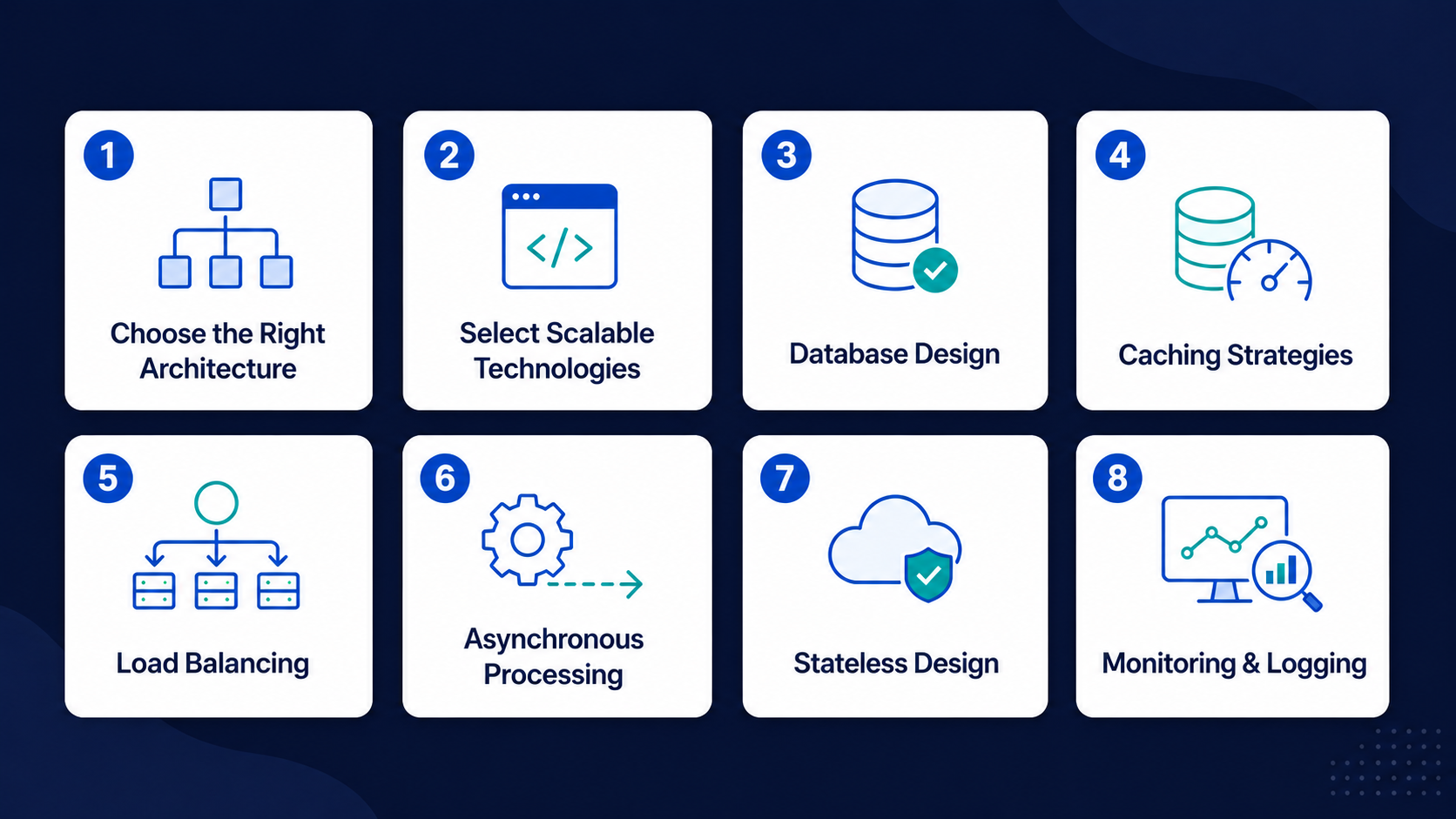
1. Choose the Right Architecture
A scalable web application architecture is crucial for long-term growth. Using modular or microservices patterns allows different components to evolve independently, reduces downtime during updates, and makes it easier to handle increasing traffic without overloading any single part of the system.
2. Select Scalable Technologies
Choosing frameworks, databases, and cloud platforms that are built to scale ensures your app can handle growth efficiently. Scalable technologies reduce the risk of performance bottlenecks and make it easier to expand your system as user demand increases.
3. Database Design
A well-planned database is the backbone of a scalable app. Techniques like indexing, replication, and sharding improve data retrieval speed, ensure reliability under heavy load, and allow your system to grow without significant downtime or performance issues.
4. Caching Strategies
Implementing caching layers, such as Redis or Memcached, reduces repetitive database queries and speeds up response times. Effective caching improves user experience, reduces server load, and ensures critical data is quickly accessible.
5. Load Balancing
Distributing traffic across multiple servers prevents any single server from becoming a bottleneck. Load balancing increases reliability, reduces downtime, and ensures your app performs consistently under heavy traffic.
6. Asynchronous Processing
Offloading time-consuming tasks to queues like RabbitMQ or Kafka keeps your app responsive. By handling background processes asynchronously, you prevent slowdowns and maintain a smooth user experience even when processing large volumes of data.
7. Stateless Design
Designing servers to be stateless, without storing persistent session data locally, allows you to scale horizontally easily. This approach ensures that adding new servers or instances is seamless, supporting growth without disrupting existing users.
8. Monitoring & Logging
Continuous monitoring and comprehensive logging help you detect performance issues early and plan for future scaling needs. Insights from monitoring tools guide optimizations, reduce downtime, and ensure your app remains reliable as traffic grows.
Scale Your Web Application with Tidon Tech
Successfully scaling a web application requires careful design, robust infrastructure, and strategic planning to handle growth efficiently. Working with a professional software development company ensures these challenges are managed effectively, saving time and reducing risk.
Tidon Tech specialises in building scalable web applications and other custom software solutions. With our expertise in architecture design, database optimization, and cloud-based systems, we can help your business grow smoothly and meet increasing demand. Get in touch today and let us help you scale your web application efficiently.